Not that I did not know before coming to Ireland all the way from Spain, but I really do think female friends are a sort of lifeline in every woman’s life.
This realization came to light pretty recently, what with me getting really close with my American roommate: I would have drowned in my own anxiety and fears long ago if it had not been because she’s been by my side all this time. Life is hard sometimes. Most of the time, if we are being honest. It’s on the fine print. And it takes a lot of strength to navigate that on your own—at least for me, someone who is still learning how to self-soothe herself so as to not break down at any inconvenience that gets in the way.
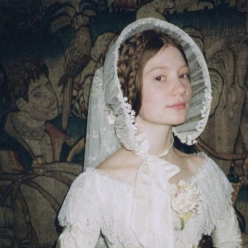
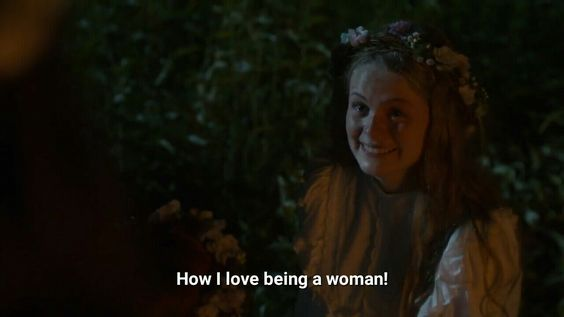
Female writers have known that for ages, though. The way novelists like Charlotte Brontë, or Gaskell, or Woolf represent such strong female bonds has always stunned me (and I will allow myself to sneak Wilkie Collins in because, though not a woman, Laura and Marian’s relationship was the highlight of The Woman in White), and has always stuck with me. When it comes to Jane Eyre, I believe Jane needed someone like Helen Burns to enter her life at that point in her journey, even if to make her first stretch at Lowood School slightly better. Gaskell shows us this type of female unity in more than one of her books, pieces where she “depicts women united by choice and by circumstance, and celebrates their talent for friendship, whether in the form of the quiet self-sufficiency of the inhabitants of Cranford or the ‘great power of loving’ that leads Molly Gibson to such courage and loyalty toward Cynthia Kirkpatrick in Wives and Daughters” (Nestor 45). Mary Taylor, coincidentally one of Brontë’s friends, expresses these same feelings in her own novel Miss Miles: “No one understood them as they understood each other. Their joint affairs were to themselves the most interesting things in the world, and their comments on them could have been uttered to no one else” (47).
I am still trying to decipher how friendships work now, in the 21st century—but it is extremely interesting to read about how female writers perceived this interpersonal relationships during their own time periods. There is something beautiful in having a part of yourself so welcomed by this random person the universe put in your way. The transition from friendship to something else, akin to sisterhood, will never fail to move me.
I am now making my 2023 New Year resolutions finding every book containing deeply emotional female friendships that make you yearn for a love like that.
References
| Nestor, Pauline. “Female friendships in mid-Victorian England: new patterns and possibilities.” Literature & History 17.1 (2008): 36-47. Taylor, Mary. Miss Miles: or, A Tale of Yorkshire Life 60 Years Ago. Oxford University Press, 1991. |